We Use CookiesWe use cookies to enhance the security, performance, functionality and for analytical and promotional activities. By continuing to browse this site you are agreeing to our privacy policy

10 Best Vegetable Fertilizers 2026 in the United States
How do we rank products for you?

Our technology thoroughly searches through the online shopping world, reviewing hundreds of sites. We then process and analyze this information, updating in real-time to bring you the latest top-rated products. This way, you always get the best and most current options available.

headphones-stars

Our Top Picks

#1

Winner

Burpee Organic Tomato & Vegetable Granular Plant Food, 4 lb

Rating
10.0
Chosen by1,375
Slow-Release vs. Quick-Release

Most important from
20700 reviews

Slow-Release vs. Quick-Release
Within days of putting it down, my old plants were already starting to show extra growth and the new seedlings I started were already shooting up with much more oomph.

Burpee Organic Tomato & Vegetable Granular Plant Food is an excellent choice for those looking to grow their vegetables organically. One of its strengths is the long-lasting nutrient release, which can feed your plants for up to three months. This is particularly helpful as it reduces the need for frequent reapplication.

The granular form is easy to apply, and it releases nutrients immediately, ensuring your plants get the essential nutrients they need right away, while also providing a steady supply over time. The product is OMRI listed, which means it is certified for organic use, appealing to environmentally-conscious gardeners.

With its balanced N-P-K ratio, it’s designed to support plant health and productivity. Burpee's long-standing reputation in the gardening community adds to the trustworthiness of this fertilizer. If you are looking for a dependable, easy-to-use, and organic fertilizer for your vegetable garden, this product is a strong contender.

Rating
10.0
Chosen by1,375
Slow-Release vs. Quick-Release

Most important from
20700 reviews

Slow-Release vs. Quick-Release
Within days of putting it down, my old plants were already starting to show extra growth and the new seedlings I started were already shooting up with much more oomph.
#2

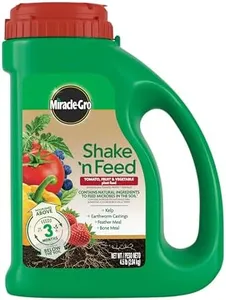
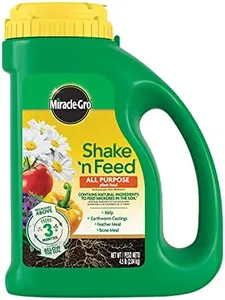
Miracle-Gro Shake 'N Feed All Purpose Plant Food, For In-Ground and Container Plants, Feeds for up to 3 Months, 4.5 lbs.

Rating
9.1
Micronutrients

Most important from
16788 reviews

Micronutrients
My plants grew fast and looked incredibly healthy after using this – almost doubled in size!

Miracle-Gro Shake 'N Feed All Purpose Plant Food offers a convenient solution for both in-ground and container plants, providing nourishment for up to three months. One of its notable strengths is the inclusion of vital micronutrients, which can help produce stronger and more vibrant plants.

Additionally, its versatility makes it suitable for a variety of plant types, including flowers, vegetables, and herbs, whether grown indoors or outdoors. This product is easy to apply by evenly distributing the granules onto the soil and working them into the top few inches, followed by regular watering to activate feeding.

Another advantage is that it contains natural ingredients, which can appeal to those looking for more organic gardening options. However, it's worth noting that while this fertilizer is classified as slow-release, which means it gradually feeds plants over time, it may not be as effective for gardeners needing immediate results.

Rating
9.1
Micronutrients

Most important from
16788 reviews

Micronutrients
My plants grew fast and looked incredibly healthy after using this – almost doubled in size!
#3

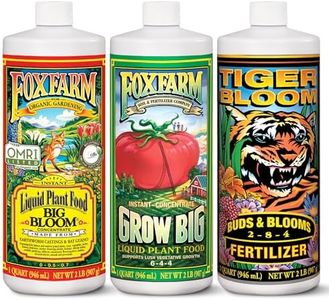
FoxFarm Grow Big Hydro Organic Liquid Fertilizer, 1 Pint - 3-2-6 Plant Food with Micro Nutrients for Hydroponic Systems - Enhances Vegetative Growth, Flowering, and Fruiting - pH Adjustable

Rating
8.5
Micronutrients
Soil pH Compatibility
Organic vs. Synthetic

Most important from
2032 reviews

Micronutrients
This fertilizer delivers a full spectrum of micronutrients that significantly boosts vegetative growth, flowering, and fruiting in hydroponic plants.
Soil pH Compatibility
Its formula can be pH adjusted without causing nutrient lock-up, ensuring stable nutrient availability and healthier plant development.
Organic vs. Synthetic
Derived from real ingredients, it stands out as a potent and reliable choice for hydroponic growers seeking organic-based nutrition.

FoxFarm Grow Big Hydro Liquid Fertilizer is designed especially for hydroponic vegetable growing but can also benefit soil gardens. It has an N-P-K ratio of 3-2-6, meaning it is higher in potassium, which supports flowering and fruiting—important for vegetables that produce fruits like tomatoes or peppers. It's organic-based, enriched with earthworm castings and essential micronutrients, helping improve soil quality and plant health naturally. One big advantage is that it's formulated to work well in hydroponic systems by maintaining stable pH and nutrient availability, reducing nutrient lock-up which can limit plant growth.

This fertilizer supports the entire growth cycle, from early leaf development through flowering and fruit production, making it versatile for many vegetable types. Being liquid and quick to absorb, it offers faster nutrient delivery than slow-release fertilizers, but might require more frequent application. It’s easy to use with simple mixing instructions, suitable for beginners or experienced gardeners.

Considering its formulation for hydroponics, it might not be as effective alone in certain soil types without additional soil amendments. Also, the relatively low nitrogen content (the first number) means it may not be the best choice if you need a fertilizer that boosts leafy green vegetables specifically. Additionally, it comes in a smaller 1-pint size, which might not be economical for large garden areas. FoxFarm Grow Big Hydro is a strong option if you want an organic, micronutrient-rich liquid fertilizer that supports fruiting vegetables and hydroponic setups. If you primarily grow leafy greens or need a slow-release option for soil, you might want to look for alternatives.

Rating
8.5
Micronutrients
Soil pH Compatibility
Organic vs. Synthetic

Most important from
2032 reviews

Micronutrients
This fertilizer delivers a full spectrum of micronutrients that significantly boosts vegetative growth, flowering, and fruiting in hydroponic plants.
Soil pH Compatibility
Its formula can be pH adjusted without causing nutrient lock-up, ensuring stable nutrient availability and healthier plant development.
Organic vs. Synthetic
Derived from real ingredients, it stands out as a potent and reliable choice for hydroponic growers seeking organic-based nutrition.

Buying Guide for the Best Vegetable Fertilizers

Choosing the right vegetable fertilizer is crucial for ensuring your plants grow healthy and produce a bountiful harvest. Fertilizers provide essential nutrients that might be lacking in the soil, helping plants to thrive. When selecting a fertilizer, it's important to understand the key specifications and how they relate to your gardening needs. This guide will help you navigate through the important aspects of vegetable fertilizers and make an informed decision.
N-P-K RatioThe N-P-K ratio represents the percentage of Nitrogen (N), Phosphorus (P), and Potassium (K) in the fertilizer. Nitrogen promotes leafy growth, Phosphorus supports root development and flowering, and Potassium enhances overall plant health. For leafy vegetables like lettuce or spinach, a higher nitrogen content (e.g., 10-5-5) is beneficial. For root vegetables like carrots or potatoes, a balanced or higher phosphorus content (e.g., 5-10-5) is ideal. For fruiting vegetables like tomatoes or peppers, a balanced ratio (e.g., 10-10-10) works well. Choose a ratio based on the specific needs of the vegetables you are growing.
Organic vs. SyntheticOrganic fertilizers are derived from natural sources such as compost, manure, or bone meal, and they release nutrients slowly, improving soil health over time. Synthetic fertilizers are chemically manufactured and provide nutrients quickly. Organic fertilizers are ideal for gardeners looking to improve soil structure and promote long-term soil health, while synthetic fertilizers are suitable for those needing immediate nutrient availability. Consider your gardening philosophy and the specific needs of your plants when choosing between organic and synthetic options.
Slow-Release vs. Quick-ReleaseSlow-release fertilizers gradually release nutrients over an extended period, reducing the need for frequent applications and minimizing the risk of nutrient burn. Quick-release fertilizers provide immediate nutrients but may require more frequent applications. Slow-release fertilizers are ideal for busy gardeners or those looking to maintain consistent nutrient levels in the soil. Quick-release fertilizers are suitable for addressing immediate nutrient deficiencies or for use during critical growth stages. Choose based on your gardening schedule and the specific growth needs of your vegetables.
Soil pH CompatibilitySoil pH affects nutrient availability to plants. Some fertilizers are formulated to work best within specific pH ranges. Most vegetables prefer a slightly acidic to neutral pH (6.0-7.0). Test your soil pH before selecting a fertilizer to ensure compatibility. If your soil is too acidic or alkaline, choose a fertilizer that can help adjust the pH or consider soil amendments to bring the pH within the optimal range for your vegetables.
MicronutrientsIn addition to the primary nutrients (N-P-K), plants also need micronutrients like calcium, magnesium, sulfur, iron, and zinc for optimal growth. Some fertilizers include these micronutrients, which can be especially important if your soil is deficient. If you notice specific nutrient deficiencies in your plants (e.g., yellowing leaves, poor growth), look for a fertilizer that includes the necessary micronutrients. Regular soil testing can help identify deficiencies and guide your fertilizer choice.

FAQ