10 Best Home 3 D Printers 2026 in the United States


Related Products
Up to 18% off

Our technology thoroughly searches through the online shopping world, reviewing hundreds of sites. We then process and analyze this information, updating in real-time to bring you the latest top-rated products. This way, you always get the best and most current options available.

Our Top Picks
Winner
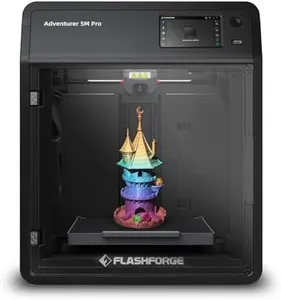
FLASHFORGE Adventurer 5M Pro 3D Printer with 1 Click Auto Printing System, 600mm/s High-Speed, Quick Detachable 280°C Nozzle, Core XY All-Metal Structure, Multi-Functional 220x220x220mm 3D Printer
Most important from
1011 reviews
The FLASHFORGE Adventurer 5M Pro is a solid choice for home users looking for a fast and reliable 3D printer. It offers a decent print volume of 220x220x220mm, which suits most creative projects and small functional parts. Its standout feature is speed, with printing moves up to 600mm/s, allowing for quicker completion of prints without much waiting. Despite this speed, it maintains good quality thanks to a stable all-metal Core XY frame and multiple nozzle sizes (0.25 to 0.8mm) that let you balance detail with print time.
The printer supports a wide range of filaments including common types like PLA and ABS as well as tougher materials like TPU and carbon-fiber blends, making it versatile for various home projects. Bed leveling is fully automatic via pressure sensing, so you don’t need to fiddle with manual adjustments, which is a big convenience for beginners. Connectivity comes through an easy-to-use mobile app that also offers remote monitoring and print control, enhancing user convenience. The software is designed to be user-friendly, helping users set up and manage prints without hassle.
On the downside, while the print volume is good for home use, it may be limiting if you want to produce larger objects. Also, the high-speed claims may require fine-tuning to avoid quality issues on very detailed models. Lastly, weighing about 32 pounds, it’s not the lightest printer, so it needs a stable spot. This printer suits home users who want a blend of speed, quality, and material flexibility with minimal setup fuss.
Most important from
1011 reviews
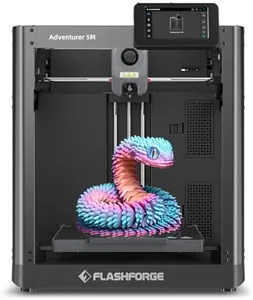
FLASHFORGE Adventurer 5M 3D Printer with Fully Auto Leveling, Max 600mm/s High Speed Printing, 280°C Direct Extruder with 3S Detachable Nozzle, CoreXY All Metal Structure, Print Size 220x220x220mm
Most important from
2401 reviews
The FLASHFORGE Adventurer 5M 3D Printer is designed for home users seeking a reliable and efficient 3D printing experience. Its standout feature is the fully automatic bed leveling system, which greatly simplifies the setup process, ensuring that you can achieve quality first layers with minimal effort. This is particularly beneficial for beginners who might struggle with manual leveling. Additionally, the printer boasts impressive print speeds of up to 600mm/s, making it suitable for rapid prototyping and quicker project turnarounds.
In terms of print quality, the Adventurer 5M excels with its dual-fan nozzle and compatibility with various filament types, including PLA, ABS, and PETG. The ability to switch nozzles quickly is a significant time-saver for users who need versatility in their projects. Moreover, the real-time app monitoring feature allows you to keep track of your prints remotely, which adds a layer of convenience.
There are some drawbacks to consider. While the maximum build volume of 220x220x220mm is adequate for many home projects, it may limit users looking to create larger prints. Some users have reported concerns regarding the printer's weight and dimensions, as it might require ample workspace.
Most important from
2401 reviews
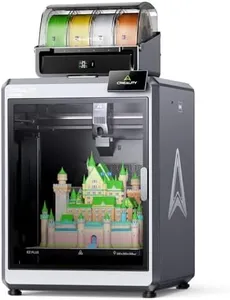
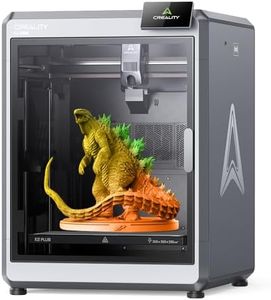
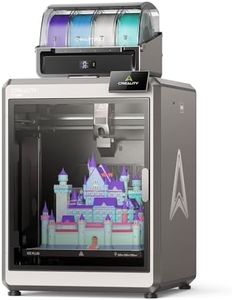
Creality K2 Plus Combo 3D Printer, Multi Color Printing with New CFS, Max 600mm/s Printing Speed, Full-auto Leveling, Next-Gen Direct Drive Extruder, Dual Al Camera, Build Volume 350 * 350 * 350mm
Most important from
885 reviews
The Creality K2 Plus Combo is a good fit for home users looking to explore multi-color 3D printing without the hassle of painting their models afterward. It supports up to 16 colors by connecting multiple Creality Filament Systems (CFS), which is a standout feature for home printers. The build volume of 350 x 350 x 350 mm is quite generous, allowing for reasonably large prints. Speed is another plus here, with a maximum print speed up to 600 mm/s and fast acceleration, making it quicker than many other home 3D printers.
The printer handles a wide range of filaments, including PLA, ABS, PETG, and several carbon fiber blends, thanks to its heated chamber and high-temp nozzle, giving users flexibility in materials. Bed leveling is fully automatic and precise, using dual motorized Z-axes and sensors to ensure the print surface is perfectly flat without manual work, which helps beginners avoid common print failures. Dual AI cameras monitor prints for issues like filament jams and even create time-lapse videos, adding useful monitoring capabilities.
The sturdy metal frame with dual Z-axis support keeps prints steady and accurate, reducing errors like layer shifts. At nearly 118 pounds and with a sizable footprint, it’s quite bulky and may require a dedicated space. This printer is well suited for enthusiasts who want multi-material and multi-color printing capabilities with high speed and quality, but it might be overwhelming or unnecessary for casual hobbyists who print less frequently or smaller items.